Tuesday, January 8, 2008

The People Speak, Immediately Ignored


The City of Fayetteville yesterday released the 2007 Survey of Citizens, an overview of local public opinion about quality of life, strategies for managed growth, satisfaction with services provided by city government, and willingness to pay for various improvements.

The Northwest Arkansas Times news article about the survey was headlined "The People Speak." One of the things the people spoke about was the supply of six types of housing in Fayetteville (Table 31). In overwhelming agreement with the City Council's top priority, 79% of our citizens say Fayetteville has too few affordable housing units, and the second largest fraction of residents (70%) concluded that there is too little housing for first-time buyers in Fayetteville. Only 2% of the people surveyed said there were too many affordable housing units. However, 58% of respondents said there were too many apartments, while only 6% said there were too few apartments in Fayetteville.

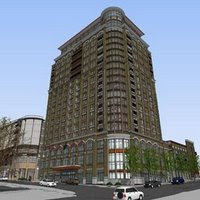
Speaking up for the 6% of people who think we need more apartments in Fayetteville, the Northwest Arkansas Times editorial today slobbered over the possibility that developer Hank Broyles would now be building hundreds of student apartments at his "very public eyesore" known as Aspen Ridge. With no indication that it might be a paid advertisement, the editorial chuckled, "we can’t help thinking there might be a little money to be made in the student housing business," especially, they continued in the fundamental spirit of higher education at the flagship, "as close as it is to all those nifty UA athletic venues?" Great marketing support.

For those who are not so enthusiastic about the developer's get rich quick scheme and are more concerned about quality of life, greenspace, stormwater run off, and neighborhood integrity, there will be a public meeting this Saturday to talk about the plans for Aspen Ridge. Ward One and Town Branch Neighborhood residents will meet with Aldermen Brenda Thiel and Adella Gray at 10 a.m. on January 12 at the South Hill Avenue Church of Christ to ask questions and discuss alternatives. The developers are expected to attend.

It will be interesting to see if citizen opinion gets any more consideration from private developers and elected officials than it did from the editorial board of the Northwest Arkansas Times, which cavalierly dismissed the citizens' concerns when "there might be a little money to be made."

Monday, January 7, 2008

Thanks, Paula


It was Plato, in The Apology of Socrates, who wrote that the unexamined life is not worth living, and the same can be said about the civic life of a community. Fayetteville is very fortunate to have Paula Marinoni to act as a provocative, stimulating, persistent, sometimes annoying, public critic to ensure a healthy democratic discussion about where we have been, where we are going, what we want, and most importantly why.

Paula has contributed countless hours to our community, founding and fighting battles on behalf of the Washington County Historic Preservation Association, Crosswalk Safety Awareness Day, the West Lafayette Street Historic Neighborhood Association, the Historic
Fayetteville Evergreen Cemetery Association, and the Flower, Garden and Nature Society of Northwest Arkansas. She is a Patron of the Poet’s Roundtable of Arkansas, yet she bravely pointed out that "it is so unbelievably irresponsible" to create a Cultural Arts District with no definition of what it is. She represented St. Joseph’s Catholic Church as a Delegate at the Conference on Honduras in
Copan Ruinas, and she fought the Central United Methodist Church's arrogant destruction of the historic Brown's Grocery on Lafayette.

Paula's most notable success was in stopping the University of Arkansas from demolishing Carnall Hall, now a jewel of the campus and community as Ella's and the Inn at Carnall Hall. She was less successful in stopping SWEPCO from getting approval to construct giant towers in the Old Main viewshed, arguing against demolition of Edward Durell Stone's Carlson Terrace for a softball field and tailgate area, or the leveling of 4-H House for another parking lot. She told
Chancellor John White and the UA Trustees that they had a "parking lot virus" and "putting a parking lot right in the middle of an area that is very historic, with no discussion whatsoever, is wrong. It’s like Sherman’s march to the sea. Grab everything you can and destroy it."

It is an often thankless task, but Paula Marinoni continues to speak out unselfishly for the public good with no expectation of income or reward, and she produces educational programs on historic preservation and gardening on Community Access Television. In 2000, she ran for Mayor and finished just ahead of Mustin and Subroto Lahiri, but now claims, "I’m not running for anything ever again." That can be forgiven, but let's hope that she continues to raise issues and hell. We should all be thankful for Paula's public spirit, and, like the inscription on Sophia Sawyer's tombstone that she has battled to restore, can be glad that
"She hath done what she could." We should also give her a little help now and then.

Sunday, January 6, 2008

Parks for People the Prime Directive

The Rogers Parks Commission is working closely with the Rogers-Lowell Area Chamber of Commerce to create Vision 2025, a master plan that anticipates investing $20 million in bond funds for public parks. They are also looking at "green space" requirements for subdivisions as a reasonable way to deal with the impact of residential developments and to respond to citizens who ranked neighborhood parks No. 5 and additional green space No. 8 in a list of more than 40 community development issues. They don't mean just the irregular scrub lots, hillsides, drainage ditches, and gullies that can't be sold for building lots, either.

Rogers Mayor Steve Womack is not enthusiastic, warning that such requirements would drive up overall project costs for developers, so the city must "be very careful that we don’t create such a requirement on developers that they decide not to develop." Womack has never been much on public parks. Rogers has spent a total of $5.5 million on its parks in the entire city history, which is even less than Springdale spent on its most recent park alone. In a 15-year period, Springdale outspent Rogers on parks by $12 million to $1 million. That's Springdale!

Unlike Womack, many citizens are well aware of the integral role that public parks, open space and trails can play in advancing a community’s economic vitality and understand the benefits of and need for adequate public funding for park acquisition and operations as an essential community service. Even the Rogers Chamber gets it.

Will Rogers, President of the Trust for Public Land, noted that “communities are learning that conserved open space contributes to the quality of life and community character that supports economic well-being. Too many community leaders feel they must choose between economic growth and open space protection. But no such choice is necessary. Open space protection is good for a community's health, stability, beauty, and quality of life. It is also good for the bottom line.”

Rogers currently has 13 parks occupying just over 400 acres of land. By comparison, Fayetteville manages 42 parks covering more than 3,300 acres, is developing approximately 17 miles of trails, and takes seriously the Ten Year Master Plan approved in 2002. Since 1981, the City has benefited from a Park Land Dedication Ordinance to further ensure the establishment and preservation of community parks, despite opposition from a reluctant Chamber that shares Womack's view that any such requirements are bad for developers and the business climate.

Mayor Womack could learn something from Fayetteville's experience. We can only hope that the Fayetteville Chamber of Cowbirds might someday get beyond short-term self-interest in making a quick buck and share the progressive vision of the Rogers Chamber leaders.


Saturday, January 5, 2008

Dead Letter Office

What's up with The Morning News? Is no one writing Letters to the Editor of TMN, have the editors decided that those letters submitted have nothing important to say, do the editors think that syndicated columnists are more valuable than local voices, or do the publisher and editors selectively decide which viewpoints will be approved and allowed to join the public debate?

Whatever is going on, it makes little sense. I have no doubt that Stephens Media, Inc. is aware that WEHCO Media, Inc. is waging a war for circulation and advertising dollars. The inclusion of local letters from the people is one way to overcome the fact that the paper is a small link in a large corporate chain headquartered elsewhere, just as the sports section reports local games and scores instead of those from Las Vegas. The absence of letters from locals might lead to the assumption that either there are few local readers or that the newspaper is not covering anything interesting enough for armchair activists to write about in response.

The opinion page is usually one of the most popular sections of most newspapers, and it reaches some influential people. Many local politicians regularly monitor letters to the editor to get a feel for the views of their constituents. While we hold certain expectations about the media's responsibility to readers, trying to stiffle citizen opinion or impose a false consensus is not one of them. The Columbia Journalism Review examined the media's bandwagon for Bush's rush to war and discovered editorial efforts that distorted public opinion.
The letters editor at The Tennessean said that "letters were running 70 percent against the war, but that the editors were trying to run as many prowar letters as possible lest they be accused of bias." The people had it right, but no one could listen.

The Committee of Concerned Journalists suggest that
journalism should work both ways in a community, and citizens have to do our part in the relationship. We have a responsibility to be engaged, to send e-mails, and letters to the editor, to be part of the public forum and in some cases to initiate it. That only works if newspapers reciprocate, treat us with enough respect to consider our views, and publish our contributions to the dialog about public affairs. Editors and readers can both learn if that happens and both realize
that even the oddballs represent a portion of the community and probably have something interesting (even if not enlightening) to add to the conversation. That's one reason I enjoy the comments section on this blog.

Editorial writers and columnists have informed opinions, but they don't have them all nor do they always know what readers might find most relevant. We would all benefit -- both the media and the reading public -- from a more vigorous discussion and a more robust debate in the Letters to the Editor section of all our local newspapers. To encourage citizen response, however, those letters must be published and in a more timely fashion.

Quote of the Day

"I have many good liberal friends who, for humanitarian reasons, disagree with me about immigration. Their position is irrational and ultimately inhumane. It will not work. It fails to recognize such realities as: a bloated U.S. population; a disastrous U.S. population growth rate that is fed primarily by immigration; 36 million Americans who went hungry in 2006; the 37 percent of us who cannot afford needed medical care; overburdened schools; sprawling land-use patterns; gluttonous resource consumption; and a sagging transportation system. A nation struggling with such burdens cannot deal with essentially unlimited immigration.

"The United States is full....

"Immigrants, both legal and illegal, are good people who have come here out of concern for their families and for their own health and well-being. We should love and care for illegal immigrants, but they need to go home. Immigrants should not be punished but should simply be sent back, at least on the first infraction. Legal immigrants should be welcomed and given much more assistance than they are currently getting, but their numbers need to be greatly reduced. There's a humane, fair and relatively easy way to do this. It's called workplace enforcement. It would have been successful long ago were it not for the unscrupulous employers who are central to our immigration problem. Immigrants, both legal and illegal, come here primarily for jobs, or to join members of their family who in turn came here for jobs. Our high-tech nation can surely devise a security system that protects civil liberties while allowing every employer to check every employee for legal citizenship. Those who are not legal citizens need be humanely returned to their home nation, while those who employ them need to be shut down."

--Art Hobson, "Against Immigration, For Immigrants," Northwest Arkansas Times

Friday, January 4, 2008

Radio Free Rogers

The news today is that Kermit Womack, daddy of Rogers Mayor Steve Womack, has hired either Ken Williams or Don LaRose as on-air personalities to be host of KURM’s “First Hour” and “The Breakfast Show” from 5 a. m. to 7 a. m. Monday through Friday. There is little chance that the former Centerton mayor's addition to the program schedule can diminish the intellectual integrity of KURM's programming or improve the political propaganda barrage that blankets Benton County.

Remember, this is the province where Tim Hutchinson parlayed his Christian radio station
KBCV to a glorious political career. The Sunday line up on KURM-AM now treats listeners to "Hymns from Harding" and a broadcast from Pastor Ronnie Floyd's First Baptist Church of Springdale, where his flock is reminded to "Vote God" come November.

Weekday drive time on KURM features Michael Medved and Michael Savage. Medved is a
former guest-host for Rush Limbaugh's radio show and recently named senior fellow at the Discovery Institute for Intelligent Design. His fact-free political acumen is widely renowned. Savage is the guy who was fired by MSNBC after telling a caller, "Oh, you're one of the sodomites. You should only get AIDS and die, you pig." His Paul Revere Society advocates closing borders and immediately deporting illegal immigrants. That will give you some idea where the local politicians get their material.

Reason Free Radio in Rogers is not like the Old Time Radio that I remember.

Thursday, January 3, 2008

Siloam Represses Those Good Vibrations

Mayor Moose Van Poucke and the Siloam Springs Board of Directors unanimously enacted an ordinance Wednesday night that prohibits a sexually-orientated business from operating within 1,000 feet of a child care facility, hospital, place of worship, school, park, playground, public library, recreational area, bowling alley or skating rink, historic places or any place selling or distributing alcohol in their fair city. They even declared passage an emergency, so it goes into effect today. Not at all what you'd call "business friendly," but there is no indication that the local Chamber spoke up in defense of commerce.


"We had a business that set up on U.S. 412 a couple of years ago that sold
adult novelties," said Siloam Springs City Manager David Cameron. "That caused some concern, that they could just come in like that. There was quite a bit of outcry to get something set up to regulate places like that." The good citizens of Siloam will not tolerate any novelty in their town, whether it be thoughts, deeds, or peddling of merchandise.

I guess banning retailing to the industrial park is better than Alabama, which passed a law attempting to criminalize the sale of vibrators, but why would the good citizens be upset about selling perfectly legal toys like vibrators a couple of football fields away from a bowling alley? Even if they are, wouldn't group therapy be better than laws stifling the American spirit of capitalism and free enterprise?

As much as Benton County politicians resent it, this is still the 21st Century. You can buy personal vibrators at Wal-Mart, and 45% of Americans report that they have used such devices for personal satisfaction. Barnes and Noble sells a handy user's manual, and Johns Hopkins University Press has published a scholarly tome on the history of the little appliances. The Kennedy Center hosted a showing of a documentary film about the excitement of electronic erotica, and I seem to recall that the Beach Boys had a popular song that went something like, "I'm picking up good vibrations; she's giving me excitations."

It may very well be a city named after the Pool of Siloam, mentioned in the Book of John, Chapter 9, where Jesus was said to have restored the sight of a blind man, but the residents seem to have an overwhelming fear of going blind. Freud coined the term "return of the repressed" to explain such neurotic symptoms. The cure might be found in the Relaxation Response, if they don't try to ban that, too.

Wednesday, January 2, 2008

Coody Wants Economic Development Strategy

Fayetteville Mayor Dan Coody says that the city needs to take time to develop an economic development strategy. As he begins his eighth year in office, he knows what hasn't worked, and he should be commended for making this a priority now. It is encouraging that he wants the City Council to institutionalize his sustainability initiatives, which could be one approach to expanding the city's revenue base.

For the last few years, the city has paid employee
Ray Boudreaux to be the Chamber's faithful errand boy and to attend meetings and take notes about economic development, but he has also been required to spend half time as the valet for corporate jet owners at Drake Field. It looks like that has been a waste of money, but at best you could say results have been hard to measure and there has been no damage done. That's about it.

Under
Fred Hanna, Fayetteville's last Republican mayor, the city forked over $100,000 a year to the Chamber of Cowbirds with no strings attached to do economic development. That arrangement ended after city revenues nosedived when the Chamber endorsed moving all commercial airlines to XNA, causing Fayetteville the loss of its public airport and a considerable number of high paying jobs. That proved to be a total disaster.

Coody called for an end to the city's dependence on outside special interests, such as the Fayetteville
Chamber of Cowbirds. "I hope they can help us as much as they can, but the city needs a strategy that's compatible with Fayetteville's perspective," he said. The mayor also recognized that our elected representatives on the City Council don't seem to have much "trust or faith" in the Chamber or the Fayetteville Economic Development Council. No wonder.

Sounding again like the man we thought we were electing in 2000, Mayor Coody called for a unique approach to community and economic development and said
, "I hope the council sees how important that is. If our economic development strategy is built on the foundation of sustainability, it makes the more long-term [goals] compatible with the philosophy of our city." Amen to that.

Tuesday, January 1, 2008

John White Hires $2 Million Consultant

UA Chancellor John White, 68, said he has hired Frank Broyles, 83, as a consultant to advise him about Razorback athletics. Broyles has been given the title of Athletic Director Emeritus, along with a seven-year $2 million contract paying at least $286,280 a year in salary, plus benefits and expenses. The agreement contains a clause that payments to Broyles would cease if Broyles were to die before the seven years were up.

White is known for frittering away millions on coaches who resign, but Broyles’ multi-million dollar contract as a consultant raises even more serious issues. The NCAA Constitution Article 6, Sec. 6.1.1. requires that the Chancellor have ultimate responsibility and final authority for the conduct of the intercollegiate athletics program. The cozy relationship suggested by the $2 million consulting contract with Athletic Director Emeritus Broyles calls into question White’s commitment to institutional control of athletics, that fundamental requirement for development and review of athletic policies by the University Chancellor, the Faculty Senate and the Faculty Athletics Representative that is absolutely essential to the integrity of intercollegiate athletics.

Chancellor White once proclaimed that “in the South, athletics are king, and that's just a fact." Such an attitude, combined with the absence of any “due diligence” requirements in executing the NCAA certification documents and reliance on the paid advice from a former athletic director who is neither an administrator nor faculty member of the University, presents a glaring failure in the chain of “institutional control.”

Time for the End of an Errror


They always demand special treatment and government handouts. The current demand for corporate welfare is in the form of subsidized water rates below cost of service and no contribution to help provide lifeline water rates for low-income elderly residents. If they don’t get their way, they whine that Fayetteville is unfriendly to business and threaten to leave.

This tactic has worked in the past, and our elected officials have caved in to the demands by the Chamber for special privileges for big business and industrial corporations. Residential users now pay $2.81 per 1,000 gallons of water, and large corporate and industrial users pay only $1.60. Mayor Coody recommended increasing every class of customers by the same percentage and permanently locking in this inequity that has the elderly and working families paying 175% more and subsidizing the cheaper rates for massive consumption by large corporate users. We don't need out of state consultants to know that's just plain wrong.

It is past time to put a halt to the Big Lie. The citizens of Fayetteville are not buying it anymore, because we have the facts. No one thinks that Bentonville is "unfriendly" to business, and they are doing quite well. They charge large industrial customers $2.86 per 1,000 gallons, and residential customers pay only 33 cents more than that. So these corporate extortionists threatening to leave Fayetteville better not even think about moving to business-friendly Bentonville, where their rates would immediately increase by almost 180%. Both Alderman Cook's cost-of-service plan and Alderman Jordan's flat rate proposal would result in rates lower than Bentonville for both industrial and residential customers.

It is time to end the cruel practice of forcing residential customers to pay for the special deals given to big corporations. The Fayetteville City Council should adopt sensible water and sewer rate structures that support the important public policies of lifeline rates for low-income elderly and conservation incentives for everyone. Responsible business and commercial customers will not object to paying their fair share and supporting the lifeline rates. Only those who put greed above fundamental fairness and the good of the community will complain, but they should not be allowed to prevail this time.